It's not yet 9am. Your receptionist is already fielding a queue of patients at the desk, the phone hasn't stopped since the doors opened, and there are three voicemails from last night that nobody has had time to return.
This isn't a bad day. For many high-volume GP clinics in New Zealand, this is simply Tuesday.
The challenge of managing patient call volume isn't new… but it's getting harder. Patient expectations have shifted. Staff bandwidth hasn't. And the gap between what a busy front desk can realistically handle and what patients need in the moment keeps widening.
This post walks through how one long-established NZ suburban general practice tackled that gap: what the problems actually were, what they tried, and what one month of real data showed.
What you'll learn:
Why GP phone pressure is a workflow problem, not just a staffing problem
The specific challenges that were grinding this clinic down
What changed after one month of using Heron as a front desk support layer
The exact numbers: call volume, hold time, staff impact, and patient response
The Problem Wasn't Just "Too Many Calls"
It's tempting to frame a high call volume problem as a headcount problem, if only we had one more person on the phones.
But for this clinic, which has been the anchor GP practice in its community for over 40 years, the issue ran deeper. It showed up in three distinct ways, affecting three different parts of the team.
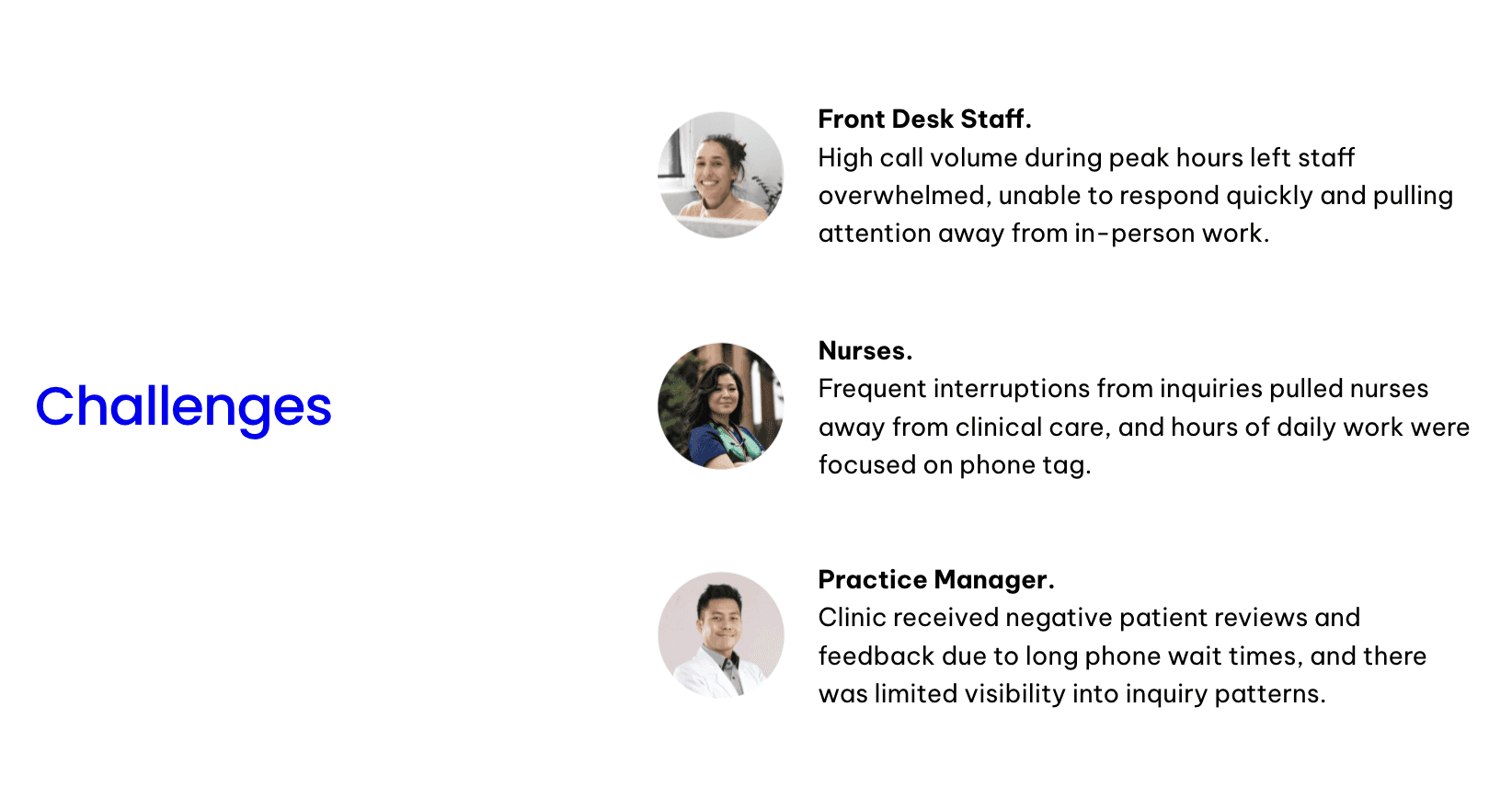
Front desk staff: overwhelmed at peak hours
During busy periods — typically 8–10am and after lunch — call volume spiked faster than the front desk could absorb. Staff couldn't respond quickly, couldn't give each caller proper attention, and found themselves constantly context-switching between patients standing at the counter and patients ringing on the phone.
The result: rushed interactions, longer wait times, and a team that started each day already on the back foot.
Nurses: pulled away from clinical work
Every time a patient inquiry bypassed admin and reached clinical staff directly, a nurse had to stop what they were doing to deal with it. Phone tag — calling a patient back, missing them, trying again — was eating hours of clinical time every day.
This isn't just an efficiency problem. It's a patient safety issue. Nurses distracted by routine admin are nurses not focused on clinical care.
Practice manager: flying blind
The clinic was receiving negative patient feedback about phone wait times, but had no clear picture of why demand was spiking, what patients were calling about, or when pressure was highest. Without that visibility, it was impossible to make informed decisions about staffing, workflows, or triage.
What the Clinic Needed (And What It Didn't)
Before any solution, it helps to be clear about the problem.
The clinic didn't need to replace its reception team. Its staff were good at their jobs, they just had too much coming at them with too little support. What the team needed was a reliable way to absorb routine inquiries, handle after-hours calls that were currently just going to voicemail, and give practice management actual data on inquiry patterns.
The solution also had to work with patients, not confuse them or create a worse experience in the name of efficiency.
What Heron Provided
The clinic introduced Heron as a communications support layer across three core functions.
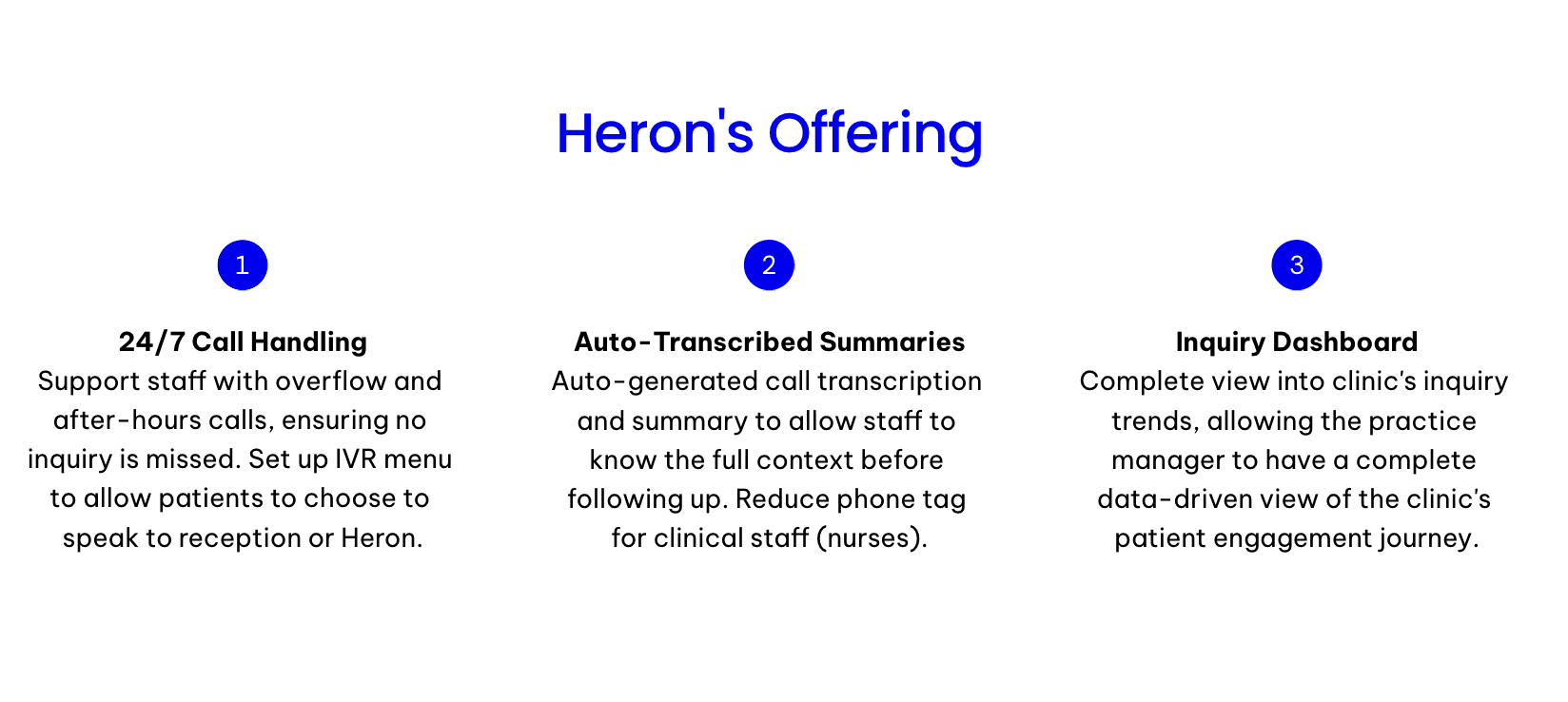
24/7 call handling.
Heron handled overflow and after-hours calls, with an IVR menu giving patients a clear choice: speak to reception, or continue with Heron. No calls went unanswered because lines were busy or the clinic was closed.
Auto-transcribed call summaries.
Every interaction Heron handled was transcribed and summarised, so when staff followed up, they already knew exactly what the patient needed. No more "can you repeat why you called?" — no more phone tag where a nurse calls back without context.
Inquiry dashboard.
Practice management gained a real-time view of inquiry trends: what patients were calling about, when volume was highest, and how interactions were being resolved.
One Month of Data: What Actually Happened
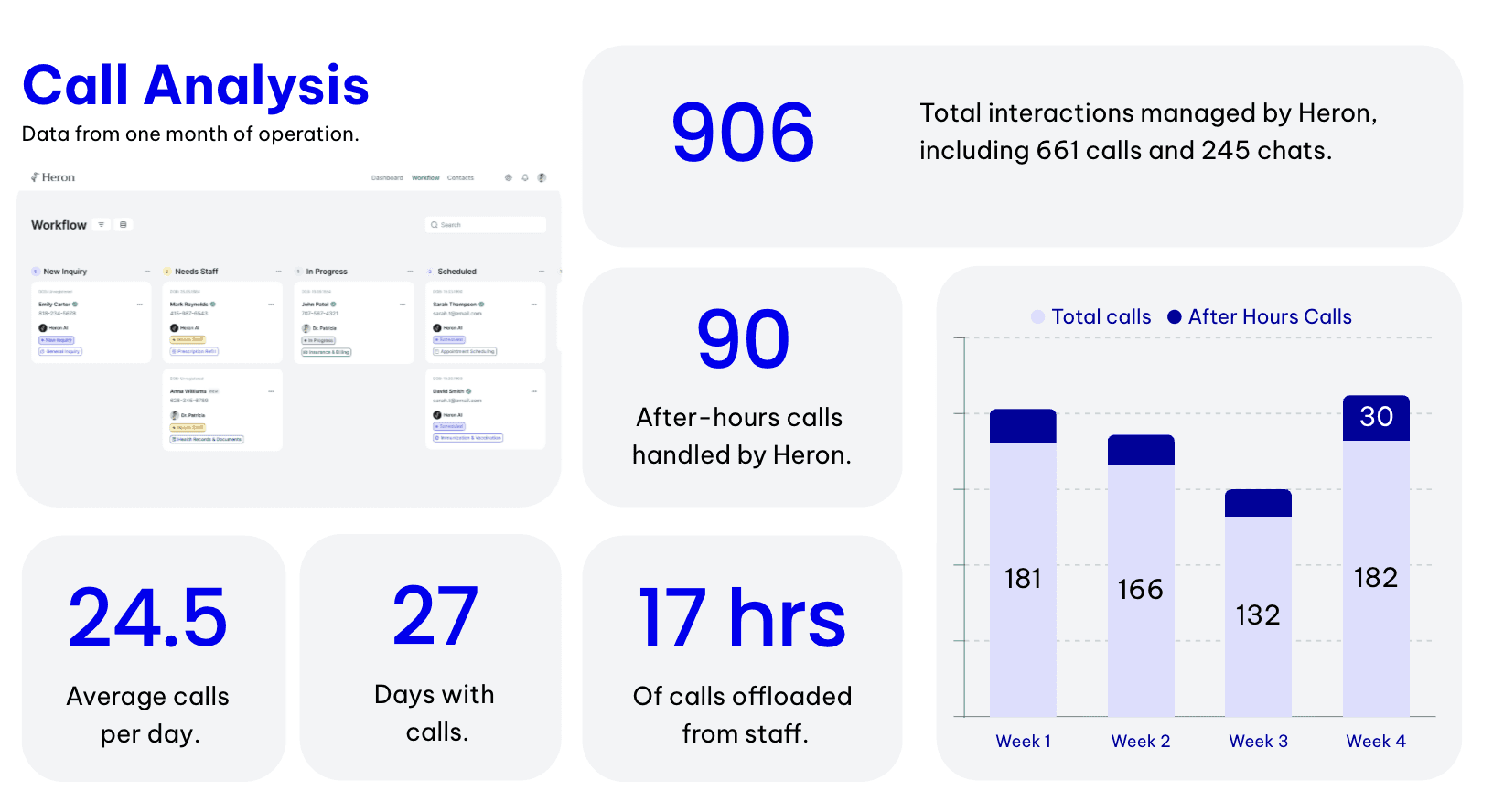
After one month of operation, the numbers were specific enough to tell a clear story.
Metric | Result |
|---|---|
Total interactions managed by Heron | 906 (661 calls + 245 chats) |
Average calls per day | 24.5 |
After-hours calls handled | 90 |
Staff call time offloaded | 17 hours in one month |
Patient acceptance rate | 93.8% |
Calls transferred through to staff | 4% |
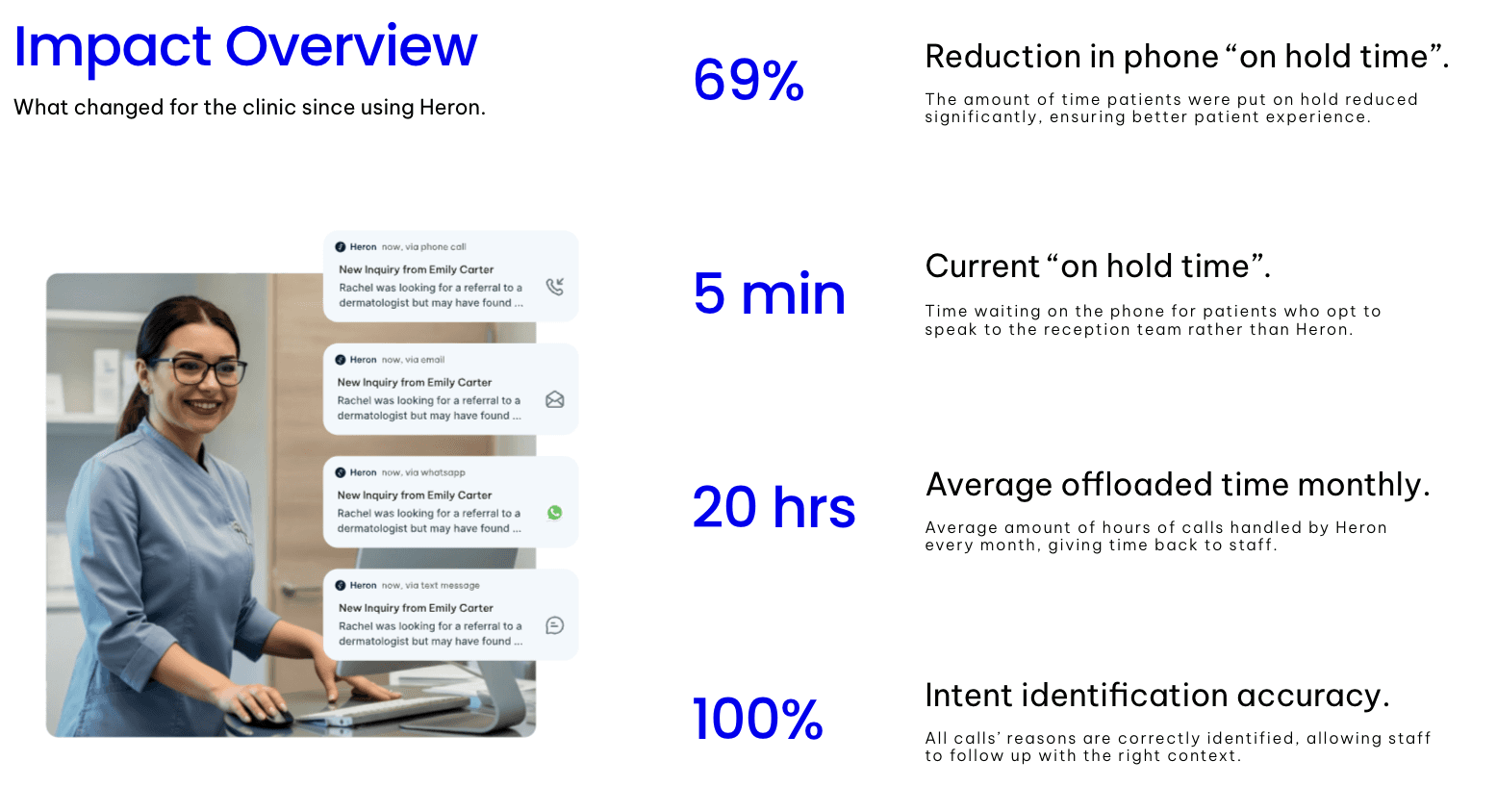
Reduction in on-hold time | 69% |
Current average hold time (for patients who chose reception) | 5 minutes |
Intent identification accuracy | 100% |
A few things stand out here.
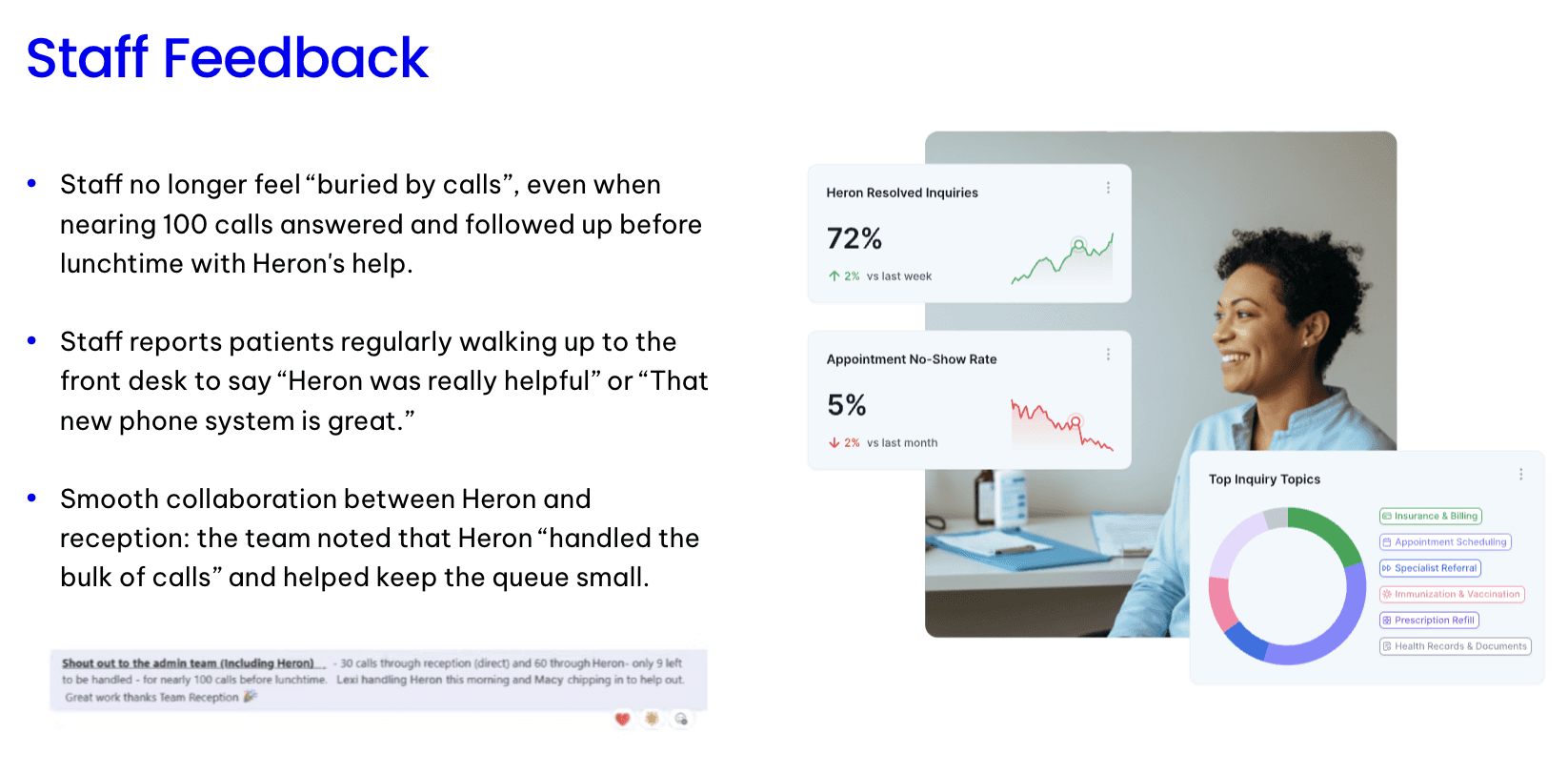
The 93.8% patient acceptance rate matters more than most metrics. It means patients weren't hanging up when they reached Heron; they were engaging with it, completing their inquiries, and finding it useful. Several patients actively walked up to the front desk afterward to say so.
The 4% call transfer rate means the vast majority of inquiries were being resolved without staff involvement at all. Heron wasn't creating work; it was absorbing it.
The 17 hours of offloaded call time in a single month is time that was previously being spent by reception and nursing staff on routine inquiries; time that can now go to patients who are actually in the building.
What patients were calling about
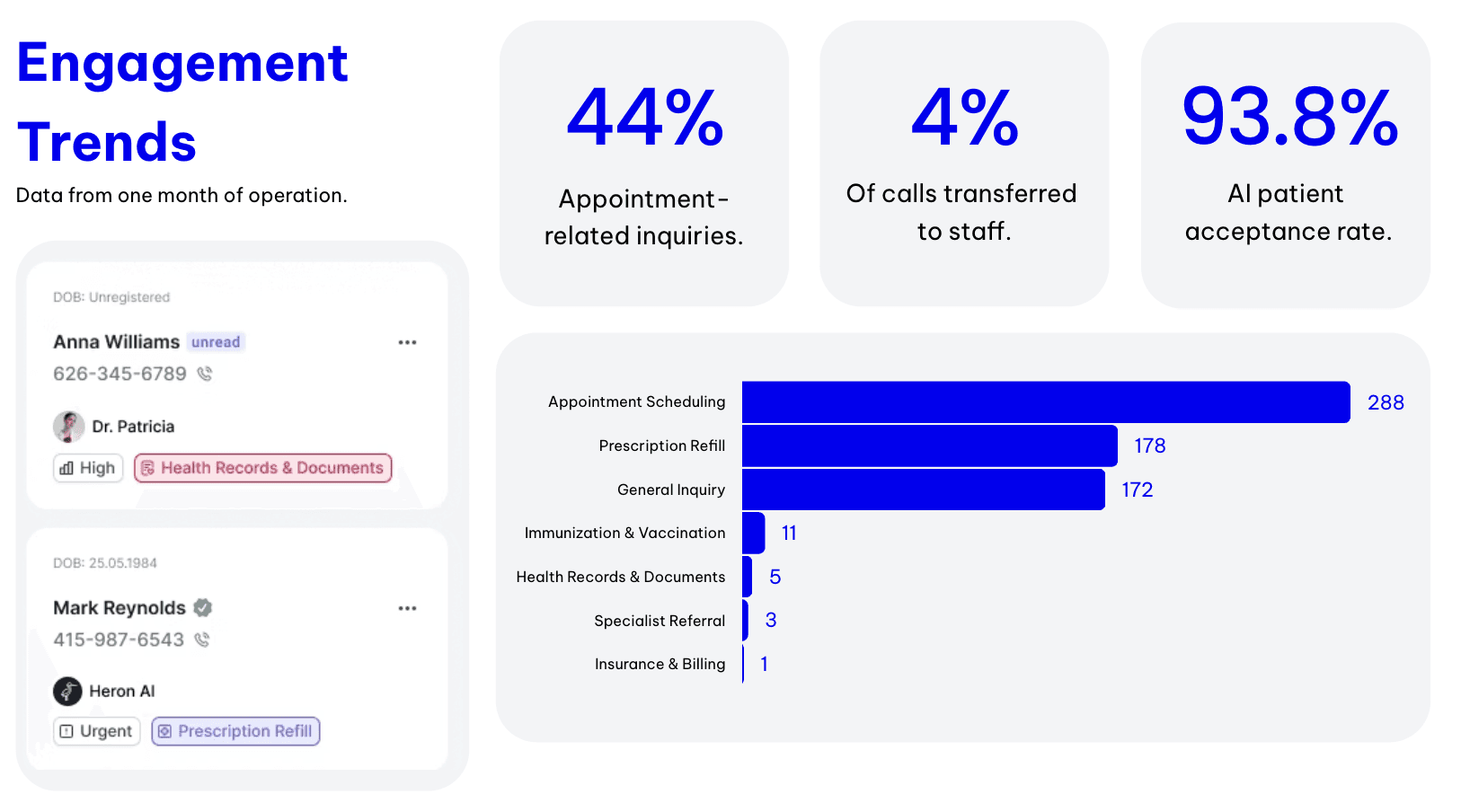
The breakdown of inquiry types revealed something useful for the practice manager: patient demand wasn't random.
Appointment scheduling: 288 interactions
Prescription refills: 178 interactions
General inquiries: 172 interactions
Immunisation and vaccination: 11
Health records and documents: 5
Specialist referrals: 3
Insurance and billing: 1
Nearly half of all inquiries were appointment-related. More than a third were either appointments or prescription refills; two categories that are highly routine and well-suited to structured handling. This kind of visibility allows a clinic to triage intelligently, not just reactively.
What Staff Said
The numbers capture the operational shift. The staff feedback captures something harder to quantify.
The front desk team reported that even on mornings where the clinic was handling close to 100 calls before lunchtime — a volume that would have previously left everyone scrambling — the day felt manageable. The queue stayed short. Staff had context before calling patients back. The work felt less like triage and more like care.
Patients were noticing too. Multiple patients went out of their way to say the new phone system was helpful. One patient left a positive review specifically about the phone experience; a reversal from the negative feedback the clinic had been receiving about wait times before.
The practice manager's own words, five months into using Heron:
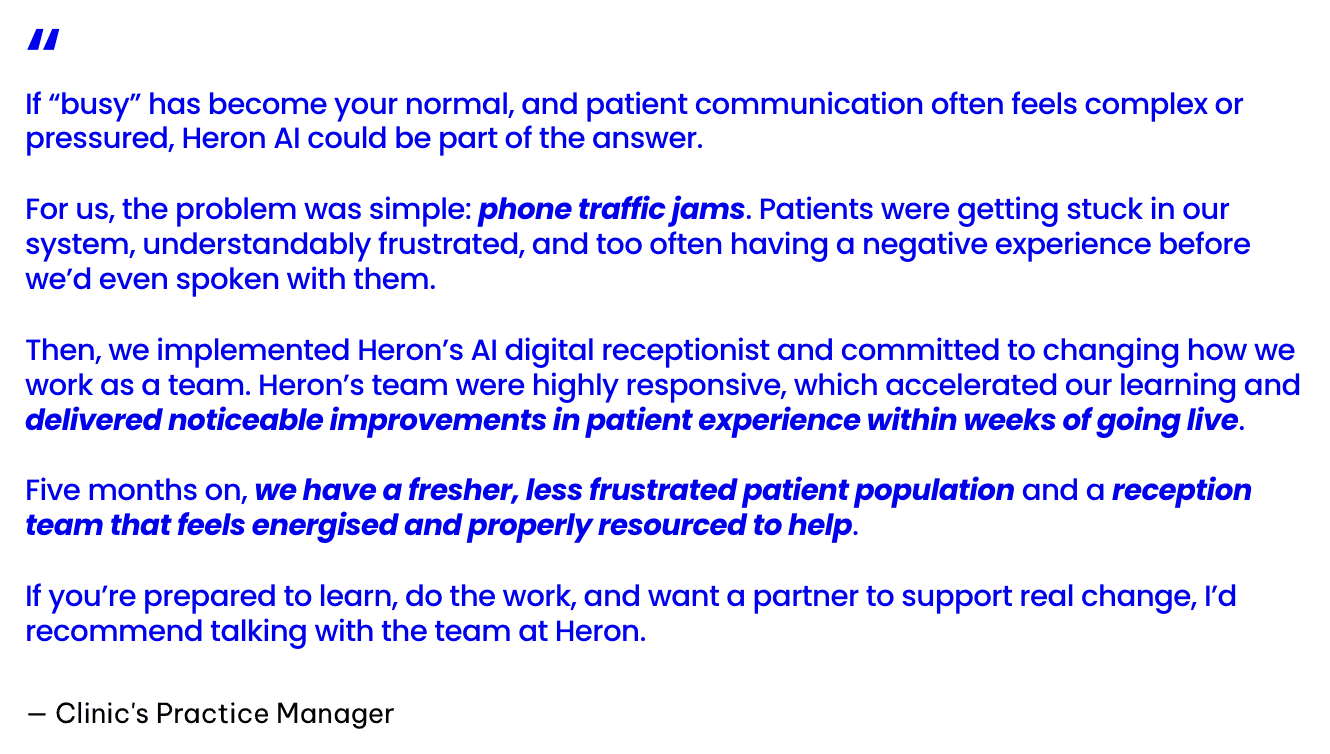
"We have a fresher, less frustrated patient population and a reception team that feels energised and properly resourced to help."
The Bigger Picture: What This Actually Solves
A 69% reduction in on-hold time is meaningful. But it's a symptom of something more important: the clinic's front desk is no longer the single point of failure for every patient inquiry.
Before Heron, every call that came in during a peak period was either answered by a stretched staff member, put on hold, or missed. After-hours calls went to voicemail and joined the pile for the morning. Nurses were interrupted by inquiries they shouldn't have had to handle. Practice management had no clear view of what was driving demand.
None of those problems required more staff to fix. They required a better system for routing, absorbing, and contextualising patient communication.
That's what a platform like Heron actually does: not replace people, but give them back the space to do their jobs properly.
Is Your Clinic Facing the Same Pressure?
If your reception team is routinely overwhelmed during peak hours, if after-hours calls are going unanswered, or if you have little visibility into what's actually driving your phone volume; the problem is worth taking seriously.
The good news: it's solvable without a major overhaul. The clinic in this case study saw measurable improvements within weeks.
Book a Free Demo to see how Heron works for GP clinics like yours.
Frequently Asked Questions
Will patients actually engage with an automated system, or will they just hang up?
In this clinic's experience, 93.8% of patients who reached Heron completed their interaction rather than abandoning the call. Patients are given a clear choice: speak to reception or continue with Heron; and the majority chose to continue. Several patients provided positive unsolicited feedback about the experience.
Does Heron handle after-hours calls?
Yes. After-hours call handling is one of Heron's core functions. In this clinic's first month, Heron managed 90 after-hours calls that would otherwise have gone to voicemail or been missed entirely.
What types of inquiries can Heron actually handle?
Heron handles a broad range of routine patient inquiries including appointment scheduling, prescription refill requests, general questions, vaccination information, and health record queries. In this clinic, over 96% of inquiries were resolved without needing to be transferred to a staff member.
How quickly does a clinic see results?
The practice manager in this case study reported noticeable improvements in patient experience within weeks of going live. The data above reflects the clinic's first full month of operation.
Does Heron work with existing clinic phone systems and practice management software?
Heron is designed to integrate with existing clinic infrastructure. It works alongside your current phone system and is compatible with leading practice management systems including MedTech, Elixir, and Gensolve.